
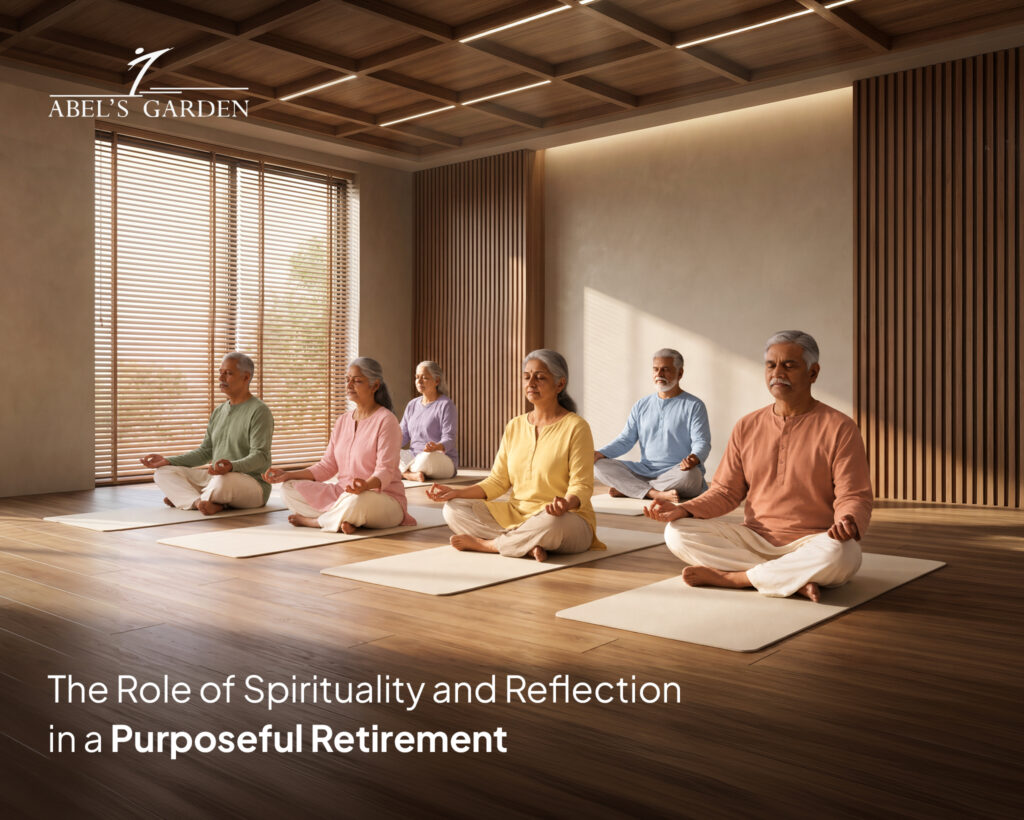
Retirement can change more than a person’s daily routine. After years of work, family responsibilities and commitments, having more time can sometimes leave people wondering what comes next. The question is no longer only how to spend the day, but what makes the day meaningful.
This is where spirituality and reflection can have a place in retirement. They can create time to pause, look back on life with gratitude, reconnect with personal beliefs and think about what still matters. For some, that may involve prayer or meditation. For others, it may be some alone time in nature, reading, conversations or simply being more present.
A purposeful retirement does not have to be built around staying busy. It can also come from having a sense of meaning, connection and inner peace. For older adults in India, spiritual retirement living can offer an opportunity to explore these aspects of life while enjoying the freedom that retirement brings.
What Spirituality in Retirement Actually Means
Spirituality in retirement does not have to mean following a particular religion or adopting new beliefs. It can simply involve looking at life with more reflection and asking what gives your days meaning.
For some people, spirituality may involve prayer, meditation or religious practice. For others, it may come through:
- Spending quiet time alone
- Being close to nature
- Reading or listening to music
- Helping others
- Staying connected with family and friends
- Reflecting on life experiences
Retirement can create more room for these things. After years of work and family responsibilities, having time to pause can help a person think about what matters to them beyond their professional life.
It Is Not Just Religion: It Is the Search for Meaning
Spirituality is personal, and there is no single way to practise it.
A person may find meaning through faith and prayer, while someone else may find it through relationships, service, creativity or time spent in quiet reflection. What matters is having something that gives a sense of purpose and personal connection.
This can be particularly meaningful after 60. Retirement brings greater freedom over how time is spent, but that freedom can also raise an important question: What do I want this stage of my life to be about?
Reflection can help people explore that question and find their own approach to purposeful living after 60.
How Indian Spiritual Traditions Have Always Honoured This Stage of Life
Indian traditions have long recognised later life as a period when people can turn their attention towards reflection and inner life.
The concept of Vanaprastha is one example. Traditionally described as a stage of gradually stepping back from worldly responsibilities, it created space for contemplation and spiritual pursuits.
Modern retirement does not need to follow this traditional model. The idea can still offer a useful perspective: later life does not have to be defined only by what a person has stopped doing.
It can also be a time to reflect on what has been lived, reconnect with personal values and consider what gives the years ahead a deeper sense of meaning.
The Spiritual Vacuum Many Retirees Feel and Why It Happens
Retirement is often imagined as a time of freedom, but the transition can feel unfamiliar. A person may suddenly have fewer responsibilities, a different daily routine and more unstructured time. After years of knowing what each day was meant to look like, that change can leave some retirees feeling restless or unsure of what comes next.
The gap is not always about having too little to do. Sometimes, it comes from losing a sense of purpose that was closely connected to work.
Identity Tied to Work: What Happens When Work Ends
For many people, work becomes part of how they see themselves. A profession can provide routine, responsibility, social connections and a clear sense of contribution.
Retirement changes that structure almost overnight.
There may no longer be meetings to attend, decisions to make or colleagues expecting you to be there. Even when retirement was a long-awaited change, the absence of these everyday roles can take some getting used to.
This can lead to questions such as:
- What is my role now?
- How do I want to spend my time?
- What gives me a sense of contribution?
- What matters to me outside my career?
These questions are not necessarily signs that something is wrong. They can be part of adjusting to a new stage of life.
The Guilt of Rest and Inner Restlessness
Many people spend decades associating a productive day with work. When retirement removes those expectations, simply resting can sometimes feel uncomfortable.
There may be a sense that time should be spent doing something useful, even when there is no longer a professional obligation to fulfil. This can make it difficult to enjoy slower days without feeling guilty about them.
Reflection offers another way to look at this period. Rest does not have to mean having no purpose. Quiet time can provide space to think, reconnect with personal values and consider what a fulfilling retirement looks like.
A purposeful retirement can therefore include both activity and stillness. The aim is not to keep every hour occupied, but to have a meaningful reason for how time is spent.
The Power of Daily Reflection After 60
Reflection does not always require a long period of meditation or a major change in routine. A few quiet minutes each day can be enough to slow down and pay attention to how you are feeling, what you are grateful for and what you want from the day ahead.
These moments can give retirement a gentle structure without turning every day into a schedule.
Morning Rituals, Meditation and Journaling
A simple morning ritual can create a calm beginning to the day. It could be sitting quietly with a cup of tea, saying a prayer, meditating or reading something meaningful.
Journaling can also provide a private space to put thoughts into words. Writing about a memory, something you are grateful for or an intention for the day can help bring greater awareness to everyday experiences.
There is no fixed routine that everyone needs to follow. The value lies in creating a little space to pause before the day becomes busy.
Nature Walks as a Form of Moving Meditation
Reflection does not have to happen while sitting still. A quiet walk can offer the same opportunity to slow down and become more aware of the present moment.
Walking outdoors allows attention to shift towards simple things such as the sound of birds, the feel of the breeze or the changing light. The focus is less on reaching a destination and more on being present during the walk.
For older adults, this can make reflection feel like a natural part of the day rather than another task to complete. A regular walk, especially in a peaceful setting, can become a time to think, observe and enjoy being outdoors.
Ikigai and Spirituality: A Natural Connection
Retirement often creates time to ask a simple but important question: What makes life feel worthwhile now?
The Japanese concept of ikigai offers one way to explore that question. It is commonly associated with having a reason to live and finding value in everyday life.
Indian philosophical traditions offer their own ways of thinking about purpose, values and how a person chooses to live.
How Ikigai Mirrors India’s Concept of Dharma
Ikigai and dharma come from different cultural traditions, so they are not the same idea. Yet both can encourage reflection on purpose and how we want to live.
| Dharma |
Finding what makes life worth living | Living according to values and responsibilities |
Finding meaning in everyday life | Considering one’s duties and place in life |
Exploring what brings fulfilment | Reflecting on how one should live |
For someone entering retirement, both ideas can prompt a useful question:
What gives my life meaning, and how do I want to live according to what matters to me?
Purpose does not have to end when a career does. It can take new forms through:
- Family and relationships
- Spiritual practice
- Learning and hobbies
- Helping others
- Creative pursuits
Purpose and Passion as a Spiritual Journey
Retirement can create space to return to interests that were put aside during working life. A forgotten hobby, a desire to learn or an interest in helping others can take on new importance.
Purpose can also develop gradually. It does not always need to involve a major goal or achievement.
For some people, it may mean:
Discovering what matters → Making time for it → Finding meaning in everyday life
That process can become part of a personal spiritual journey, helping retirement feel less like an ending and more like a new stage of life.
What a Spiritually Supportive Retirement Community Looks Like
A spiritually supportive retirement community does not need to look like a religious institution. It can simply be a place where older adults have the time, space and freedom to reflect, stay connected and pursue what gives their lives meaning.
A supportive environment can make room for:
- Quiet spaces for prayer or reflection
- Opportunities to spend time outdoors
- Social connections and shared activities
- Hobbies, learning and personal interests
- Time with family and the wider community
The idea is to create an environment where retirement is not defined only by comfort or convenience. It also leaves room for personal growth, relationships and a sense of purpose.
Why Abel’s Garden Is Built for Purposeful Retirement Living
Abel’s Garden takes a broader view of retirement living. Its approach is shaped around the idea that later life can remain active, meaningful and connected.
The community brings together spaces and activities that support different aspects of everyday life, including:
- Ikigai-inspired living: Encouraging residents to find meaning in the activities and relationships that matter to them.
- Spaces for reflection: Areas such as the Yoga & Meditation Pavilion provide an opportunity for quiet time and personal reflection.
- Social connection: Shared spaces and activities create opportunities to spend time with others and build meaningful relationships.
- Interests and recreation: Facilities such as the Home Theatre, Fitness Centre and Signature Dining give residents different ways to spend their time.
- Independent living: Step-free, single-level Villaments are designed around ease of movement and everyday independence.
Purposeful retirement does not look the same for everyone. Abel’s Garden provides the setting for residents to shape this stage of life around their own interests, relationships, routines and values.
Retirement can be more than a change in routine. It can be a time to reflect on what matters, reconnect with personal values and find new meaning in everyday life. Spirituality, reflection and a sense of purpose can all have a place in this stage of life. At Abel’s Garden, purposeful retirement living creates space for connection, reflection and the freedom to make these years meaningful in your own way.
Neither tells you what the day actually feels like once someone moves in. At Abel’s Garden in Thodupuzha, Kerala, the amenities are built around the question: how a resident’s day actually unfolds?
A campus buggy can make longer distances easier. An on-site consultation room can make routine health appointments more convenient. These details tell you more than a generic list of amenities ever could. They show what luxury retirement living can look like when a community is designed around everyday life.
Why Amenities Matter More Than Ever in Senior Living
Retirement used to mean a smaller life: fewer people to see, fewer things to do, fewer reasons to leave the house. Amenities exist to reverse that shrinkage, and the way they are designed decides whether they actually do.
What good amenities solve for:
- Mobility: a campus buggy service means a longer walk is never the reason someone skips the clubhouse or the dining hall
- Safety: 24-hour security and an on-call ambulance mean peace of mind is not something residents have to manage on their own
- Loneliness: shared dining spaces and community areas give residents a reason to leave their villa each day
- Boredom: a gym, pool, or library only helps if it is designed actually to get used, not just looked at
Loneliness is not a minor concern in senior living. The Longitudinal Ageing Study of India found that 26.7% of urban elderly live either alone or with non-family members, a gap that shared dining spaces and daily community areas are specifically designed to close. |
How This reflects a shift in how senior living is designed:
Older retirement homes were built around one question: how do we keep residents safe? That question still matters, but families evaluating a retirement community today are asking a second one: how does this place help someone live well, not just live safely?
- Safety remains the foundation: gated access, trained staff, and medical support close at hand
- Purpose is what gets built on top of it: Abel’s Garden’s Ikigai-inspired philosophy uses spaces like the library, the yoga and meditation pavilion, and creative workshop rooms to support passion and meaning.
The Amenities That Matter in Senior Living
A luxury retirement community combines comfortable living with the facilities and services residents need for everyday life. These typically include wellness and fitness spaces, healthcare and safety support, dining, accessible transportation, recreation, outdoor areas, and spaces for social, spiritual, and personal pursuits. The aim is to make daily life more comfortable and convenient while giving residents the freedom to remain active, independent, and connected.
Wellness and Fitness Facilities
A well-equipped community should offer more than a conventional gym. Look for options that suit different fitness levels and mobility needs, such as walking paths, swimming pools, yoga spaces, and indoor or outdoor exercise areas.
These facilities make it easier for residents to maintain movement as part of their daily routine without having to travel elsewhere for exercise or wellness activities.
Healthcare and Safety
Access to healthcare becomes an important consideration when choosing a retirement community. Consider convenient access to consultation facilities, emergency response, security, and transportation to external medical services when required.
A community should also have appropriate safety measures, accessible spaces, and trained personnel who can respond when residents need assistance.
Dining and Hospitality
Food should be more than a daily necessity in a retirement community. Look for varied menus, nutritious meals, accommodation for dietary requirements, and the flexibility to cater to different cultural and personal preferences.
Hospitality also extends to family. Guest accommodation and spaces where residents can spend time with visiting relatives can make it easier to maintain close family connections.
Mobility Within the Community
A large campus can offer plenty to residents, but only if they can comfortably move around it. Internal transport services, accessible pathways, and convenient access to shared facilities can be particularly valuable for residents with limited mobility.
The aim is to make the whole community usable rather than having residents feel restricted to the areas closest to their homes.
Recreation and Social Spaces
A retirement community should provide places for both social interaction and individual interests. Libraries, cinemas, activity rooms, workshops, performance spaces, and communal areas give residents different ways to spend their time.
Variety matters here. Some residents may enjoy organised activities and performances, while others may prefer reading, creative pursuits, or smaller gatherings.
Outdoor and Nature Spaces
Access to nature can add another dimension to everyday life. Look for landscaped gardens, walking trails, open green areas, water features, and other outdoor spaces that residents can use rather than simply view.
Well-designed outdoor areas can provide places to walk, exercise, sit quietly, meet friends, or spend time away from the home.
Spiritual and Personal Spaces
A well-rounded retirement community should also make room for quiet and personal pursuits. Prayer rooms, meditation spaces, reading areas, and other peaceful environments give residents places to reflect, practise their faith, or simply spend time alone.
The best communities recognise that an engaging retirement is not about filling every hour with activities. Residents should have the freedom to decide how they want to spend their time.
Amenities That Go Beyond the Physical: Community and Purpose
A retirement community can provide comfortable homes, good food, healthcare access, and plenty of facilities, but those things only describe part of the experience. What residents do with their time and how connected they feel to the people around them matter just as much.
Keeping Personal Interests Alive
Retirement can create time for interests that may have taken a back seat during working life. A good community should make room for hobbies, learning, creativity, reading, gardening, and other pursuits that residents can choose according to their own interests.
The important point is choice. Residents should have opportunities available without feeling that every day needs to follow a fixed programme.
Making Social Connection Part of Everyday Life
Social interaction should not depend entirely on residents arranging outings or travelling elsewhere. Shared spaces, communal meals, events, and informal gathering areas can make conversation and companionship a natural part of daily life.
At the same time, a well-designed community should respect different personalities. Some residents may enjoy being surrounded by people, while others may prefer smaller gatherings or quieter ways of connecting.
Leaving Room to Contribute
Retirement does not have to mean stepping away from everything that once gave life meaning. Some residents may want to share their knowledge, support others, teach a skill, or remain involved in the wider community.
Opportunities to contribute can give residents a sense that their experience continues to have value and that they remain part of something larger than themselves.
Giving Residents Reasons to Look Forward to the Day
This is where the idea of purpose becomes important. A fulfilling retirement is not about keeping every hour occupied. It is about having the freedom to choose how to spend the day, people to connect with, interests to pursue, and experiences that feel worthwhile.
The facilities provide the spaces. What residents do in them, and the people they share them with, is what gives those spaces meaning.
What Everyday Life Looks Like at Abel’s Garden
At Abel’s Garden, community life extends beyond the facilities themselves. Residents have opportunities to take part in activities, spend time with others, pursue interests, and continue sharing their experience.
Creative Pursuits
Art workshops give residents an opportunity to explore creativity at different skill levels. Poetry sessions and storytelling activities provide other ways to express ideas, memories, and experiences.
For residents who enjoy working outdoors, raised garden beds offer a hands-on activity and a reason to spend time among the greenery.
Shared Experiences
The Ikigai Centre’s community hall and 20,000 sq. ft. clubhouse provide spaces for guest lectures, gatherings, and cultural events. Weekly community dinners bring residents together over a shared meal, creating regular opportunities to meet and spend time with neighbours.
The amphitheatre also provides a setting for performances and community programmes, adding another dimension to the social calendar.
Opportunities to Give Back
Residents who want to remain connected beyond the community can take part in mentorship programmes with local schools. These opportunities allow them to share professional knowledge, life experience, and skills with younger people.
For some residents, that continued connection with the wider community can be as meaningful as the activities available on campus.
Ikigai in Practice
These experiences reflect the Ikigai philosophy associated with Abel’s Garden. Rather than treating retirement as a period defined only by comfort and leisure, the community creates opportunities for residents to continue learning, creating, connecting, and contributing.
The result is a daily environment where residents can decide what they want to take part in, whether that means joining a workshop, meeting friends over dinner, tending a garden bed, attending an event, or simply enjoying their own time.
Conclusion
An impressive amenities list is easy to put in a brochure. The more important question is what those facilities add to a resident’s everyday life.
Health support, accessible spaces, good food, outdoor areas, recreation, family facilities, and opportunities for connection all matter. But so does having somewhere to go, something to enjoy, and people to share it with.
Abel’s Garden brings these elements together in Thodupuzha, offering a senior living experience that looks beyond comfort alone and makes room for activity, relationships, interests, and purpose.
Share :