
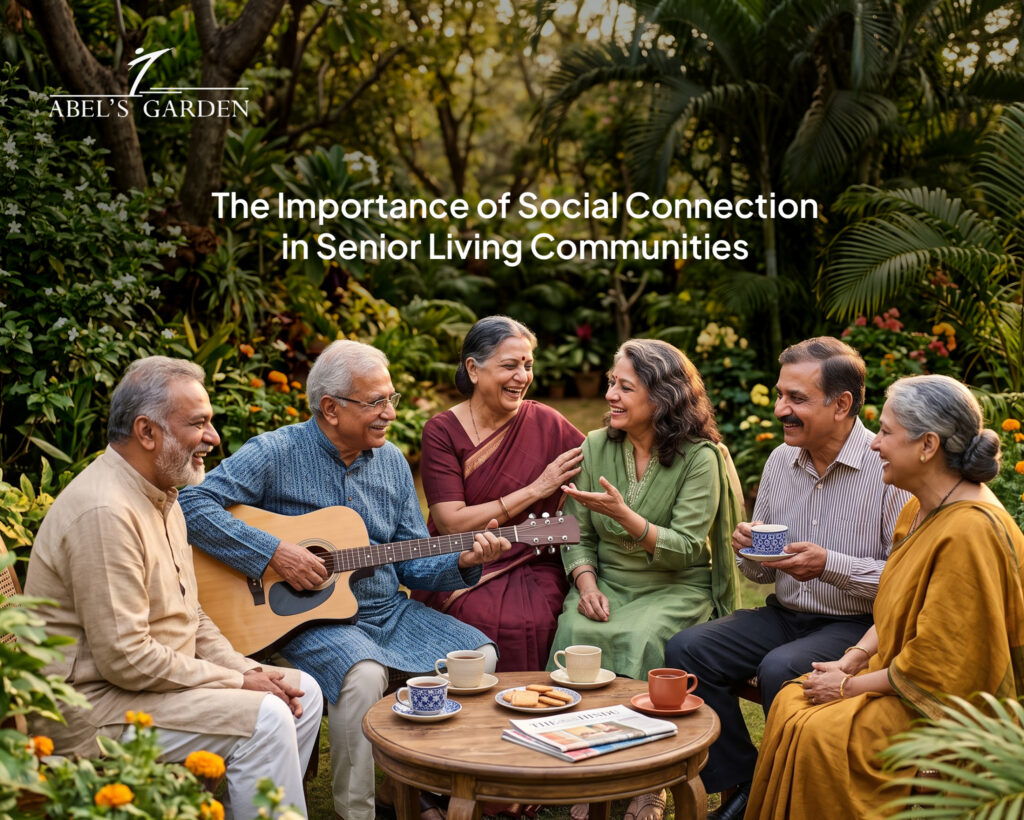
Many Kerala families know this scene well. A big house sits quiet in the afternoon, and the phone rings twice a week. Children have settled in Bengaluru or Dubai, and parents stay on in the home they built, comfortable and safe but alone for most of the day.
A retirement community can offer a spacious home and medical support on call, yet none of it matters much if residents rarely step out of their own front doors. Social connection decides whether a senior living community in Kerala feels like a place to belong. This blog looks at why it matters so much after retirement and what to look for in a community that gets it right.
Why Social Connection Matters More After 60
Work and busy households give life a natural rhythm, and that rhythm keeps people in touch without any effort. After 60, much of it falls away. Here is what the research shows about why staying connected matters so much from that point on.
- Strong relationships predict healthier ageing. The Harvard Study of Adult Development has followed people since 1938. It found that satisfaction with relationships in midlife predicted healthy ageing better than genetics or long-lived ancestors did.
- Connection helps the body handle stress. Researchers suggest that close relationships help the body settle back down after stress. The WHO Commission on Social Connection linked strong social ties to lower inflammation and a lower risk of serious health problems.
- Loneliness raises physical risks. A National Academies report tied isolation and loneliness in older adults to a higher risk of heart disease and dementia. The WHO Commission’s report adds stroke and cognitive decline.
- It weighs on mental health and feeds itself. Poor health makes it harder to get out and meet people, and the isolation then wears health down further. Older adults are more exposed because they are more likely to live alone or to lose friends and family.
- India’s family structure has shifted. Joint families are increasingly giving way to nuclear ones, and in Kerala, migration has added to the change. Elderly couples now often live alone in homes once occupied by large joint families.
- Distance leaves a gap that calls cannot fill. Older adults in Kerala’s migrant households said that being far from their children left them anxious, missing family togetherness and lonelier. Video calls keep families close, but long stretches alone remain. The state has taken note and announced India’s first dedicated department for senior citizens.
The Hidden Cost of Social Isolation in Retirement
Isolation rarely announces itself. It builds through empty afternoons, and the toll on body and mind shows up long before anyone names the cause.
What it does to the mind and heart. Researchers link social isolation in older adults to faster cognitive decline and a higher risk of dementia. Depression appears to play a part in that route, since socially isolated older adults face a higher risk of depression and studies suggest it helps carry the damage through to thinking and memory. The heart is affected as well. Analyses of older adults tie loneliness and living alone to a higher risk of death from cardiovascular disease.
When children live abroad. Migration has given many Kerala families a child in another country, and a parent at home who feels the distance daily. In a study of Kerala’s migrant households, older adults said the gap left them anxious and lonelier, with holes in everyday care. Elder care providers who work with NRI families add that many parents never mention it, because they feel they should adjust. They drop activities they once enjoyed, and families often see the full picture only after a fall or a health scare. From thousands of kilometres away, spotting the early signs is harder than it sounds.
Why home alone is not always safest. A familiar house feels secure, but living alone changes what happens when something goes wrong. Older adults on their own may wait longer for help after a fall and have less social support around them. Since help is not close at hand, emergencies more often end in hospital care. Falls tend to happen in wet areas and on steps, and someone alone can lie hurt for hours before anyone checks.
Community living closes that gap by keeping company and help within reach every day.
How Senior Living Communities Solve the Social Gap
Loneliness in retirement is rarely about a shortage of caring people. It is a shortage of reasons to be in the same place at the same time. A well-run senior living community builds those reasons into ordinary days.
What the community offers | What it looks like | Why it closes the gap |
Structured daily interaction | Morning wellness sessions such as yoga or a group walk, plus a weekly calendar of social and cultural programmes | Residents get a reason to leave home every day and never have to organise company themselves. Steady contact keeps isolation from setting in. |
Shared dining, group activities and cultural events | Meals at a common table, music evenings, festival gatherings | Eating with others is linked to a better appetite and a stronger sense of belonging, and it eases the appetite loss loneliness often brings. |
Peer friendships | Neighbours at a similar stage of life who share interests and values | Shared context builds deeper bonds than are easy to find in an empty house or a busy multigenerational one. Regular contact becomes emotional support. |
Mentoring, volunteering and contributing | Teaching a skill, guiding younger visitors, helping run a community event | Volunteering is associated with better mental health, a stronger sense of purpose and less loneliness. Mentoring meets the need to feel useful and to belong. |
What Social Life Actually Looks Like at a Retirement Community
Brochures list amenities. Social life is what happens inside them. Here is how a day, and a year, tend to unfold in a good retirement community.
- Mornings: walking and moving together. Group walks and yoga sessions set the tone for the day, paced so that everyone can join in. Physical inactivity is one of the factors linked to loneliness among older Indians, so a walk with neighbours does two jobs at once. The chat along the way is usually where friendships begin.
- Afternoons and evenings: making and sharing things. Art and music sessions give residents something to work on together, and clubs built around books or gardening bring like-minded people to the same table. Storytelling nights and musical evenings fill the hours after sunset, so a full night out never means leaving home.
- Across the year: festivals and milestones. Festivals and birthdays run through the calendar, so there is always something to look forward to. Families are welcome to join, which means a child home from abroad can be part of the celebration in person.
Why Abel’s Garden Is Built for Meaningful Social Connection
Abel’s Garden is a retirement community in Kerala built around Ikigai, the Japanese philosophy of living with purpose. Ikigai holds that doing what you love, alongside people who matter, gives each day its meaning. Connection at Abel’s Garden is therefore part of the design and never an add-on, and every space and programme follows from that idea.
- Shared meals: A dining hall made for eating together, where visiting family can join residents.
- Moving together: Guided walks along green trails and open-air yoga.
- Passion, shared: Creative studios for painting, crafts, music and writing, where residents keep doing what they love in good company.
- Evenings out: An amphitheatre for storytelling nights, musical evenings, film screenings and talks.
- Wisdom passed on: Clubs built around books and gardening, plus mentoring circles where residents pass on stories and life lessons. It gives each person a continuing role, which is the Ikigai idea of vocation.
- Purpose beyond the gates: Volunteer outreach that connects residents with the town. Volunteering is linked to a stronger sense of purpose and less loneliness in older adults.
With medical staff on site around the clock, along with routine health monitoring and medication management, residents can spend their energy on people instead of worry. Families can stay in furnished rooms within the clubhouse too, so a child visiting from abroad spends time inside the community rather than apart from a parent. Purpose and connection grow together here, which is Ikigai in daily practice.
Conclusion
Retirement can bring major changes to daily life, especially when children live far away, or familiar routines fade. A good senior living community in Kerala can provide more than comfortable accommodation and healthcare. It can offer shared activities, friendships, family time and opportunities to stay active and involved.
At Abel’s Garden, these elements are part of everyday community life. Guided by Ikigai, residents have spaces and activities that encourage purpose, companionship and participation, with health support close at hand. The result is a retirement environment where seniors can continue to enjoy meaningful days, shared experiences and a strong sense of belonging.
Share :