
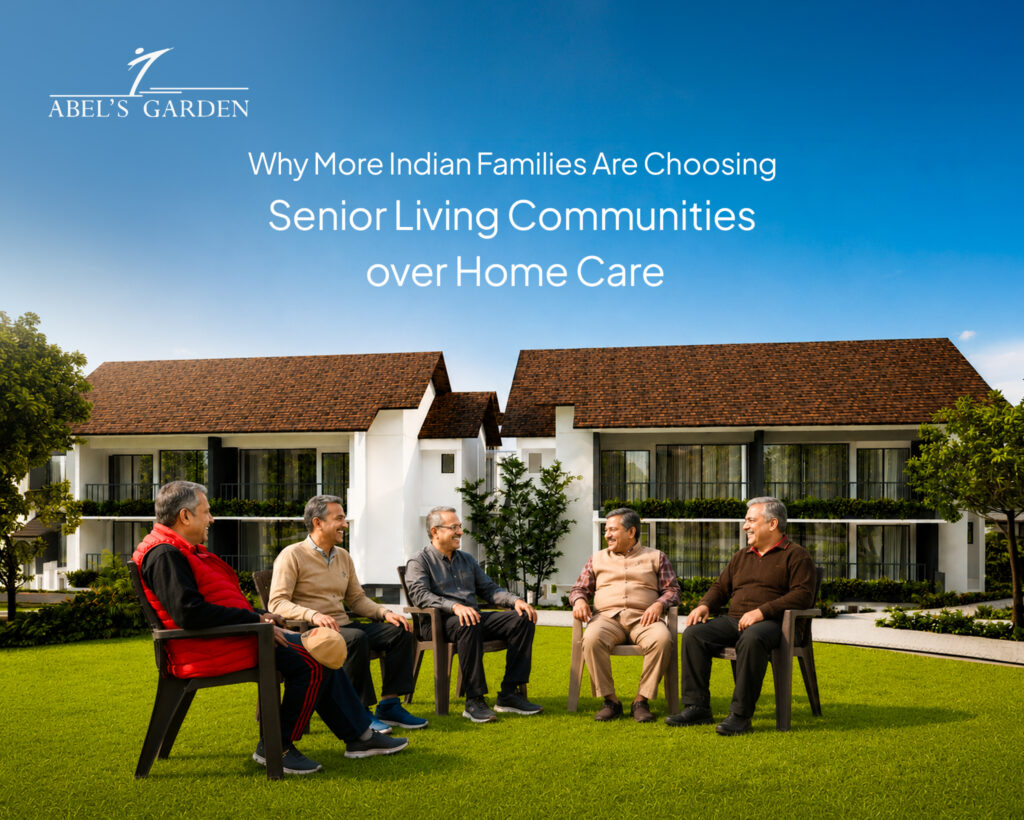
A group of men in their seventies claiming their favourite spot on the lawn every morning. They dissect the news, discuss politics and economics, and somehow always end up talking about the rising price of milk.
Soon, serious conversations dissolve into laughter as someone cracks a joke. Scenes like this are becoming increasingly common across retirement communities in India.
Far removed from the stereotype of slowing down, today’s retirement is becoming more active, social, and fulfilling than ever before. As expectations around ageing continue to evolve, more families are rethinking what the best retirement lifestyle really looks like.
For generations, retirement looked very different.
Growing older meant staying in the family home, surrounded by children, grandchildren, and familiar routines. Caring for ageing parents was a shared responsibility, woven into everyday life through the joint family system.
Those values remain, but life has changed. Families are smaller, children often move away for work, and busy schedules leave less time than before. Many older adults find themselves spending long hours alone, even when they have a loving family.
Home care continues to be the preferred choice for many, but balancing caregiving, medical needs, and daily responsibilities isn’t always easy. As retirement evolves, so does the way families think about care, companionship, and quality of life in later years.
Home is where most families hope their loved ones can age comfortably. But as care needs become more complex, even the most dedicated families can find it difficult to provide the level of support older adults need every day.
Finding reliable, trained caregivers isn’t always easy. Families often rely on domestic help or part-time attendants who may not be equipped to handle age-related health conditions, mobility issues, or emergencies.
Living at home doesn’t always mean staying socially connected. As friends move away, mobility declines, or family members spend long hours at work, many older adults begin to experience loneliness and reduced social interaction.
A fall, sudden illness, or unexpected medical emergency can happen at any time. When an older adult is alone, even a short delay in receiving help can have serious consequences.
Many families find themselves balancing careers, raising children, and caring for ageing parents at the same time. While the commitment comes from love, the physical and emotional demands can become overwhelming over time.
For families living overseas, staying involved in a parent’s daily care can be especially challenging. Phone calls and regular visits offer reassurance, but they cannot replace the comfort of knowing someone is always nearby when support is needed.
For ages, moving into a senior living community was taboo and misunderstood as a last resort. But now the perception is changing entirely. People are choosing these communities simply because they want to experience a lifestyle with better comfort and independence.
For many families, senior living is no longer about stepping away from home. It’s about choosing a place where older adults can continue living life on their own terms while staying close to a supportive community.
Today’s senior living communities are designed for the needs of older adults. This also means comfortable homes, better communities, healthcare support and opportunities to socialise all come together in one place.
More than a place to live, these communities create an environment where residents can build friendships, stay active, pursue hobbies, and enjoy the reassurance that help is available whenever it’s needed. It’s a lifestyle built around well-being, independence, and peace of mind.
More than family care, it’s about giving support to people that families often struggle to provide on their own. As the expectations around retirement life continue to evolve, many families are choosing senior living communities for the comfort and care they offer.
Access to trained staff, regular health monitoring, and prompt assistance during emergencies gives residents and their families greater peace of mind, day and night.
Group activities along with everyday conversations and shared meals make it easy for everyone to nurture a strong connection and reduce the feeling of isolation and loneliness.
The daily routines in these centres are designed to support the physical needs and emotional well-being of the residents. From hobby clubs and wellness programmes, the entire ecosystem is built with a ‘resident- focused’ mindset.
Families can spend more quality time with their loved ones instead of constantly worrying about caregiving responsibilities or unexpected emergencies.
The residents can enjoy their space and live independently with the reassurance that the support is always closer when they need it.
Every family’s situation is different, so there’s no single answer that works for everyone. The suitable choice will depend solely on your loved one’s health and lifestyle and the level of support they need to continue living safely and happily.
Choosing the right care for an ageing loved one is one of the most important decisions a family can make. While home care continues to be the right choice for many, senior living communities offer a safe, supportive environment where older adults can enjoy greater independence, meaningful social connections, and access to care when they need it. For families in Kerala, communities like Abel’s Garden provide a thoughtful balance of comfort, companionship, and peace of mind for every stage of retirement.
Share :